The Silverton Medieval Garden
Protection, Recovery, Restoration, and Preservation

Elizabeth’s Design
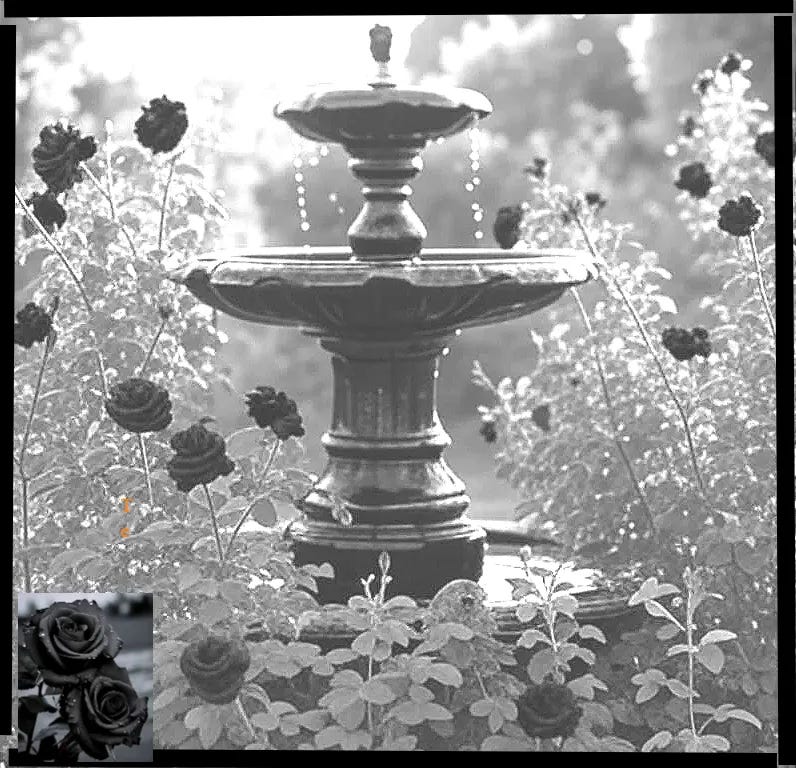
Elizabeth Silverton, a British Victorian scholar, medievalist, and botanist, acquired acreage adjacent to the New England university she and her brother founded. Her vision was to preserve the land as a botanical refuge, providing a restful and restorative environment to her community. She would continue to study and practice the ancient Celtic healing traditions. An imposing, three-tiered iron fountain with a reflection pool commanded the central axis. In each of four raised beds, she planted apothecary herbs in disciplined rows, old as medieval times. An imported obelisk and a finely wrought arbor and bench marked solstice lines, astronomical alignments echoing ancient healers’ scripts.
Brick and stone walls bordered three sides of the enclosed garden, supporting espaliered fruit trees and vines. A feathery yew hedge, tall and of the deepest green, edged the fourth side, with a heavy cedar board gate fitted within the hedge. The gate was a less formidable version of a medieval British gate, though its leather strap hinges and iron bolts gave it that appearance. It swung outward; its threshold allowing safe egress from the inner sanctuary to the wide lawn. Past enchanted perennial borders, toward the Cedar Grove portal, and to the path into the forest dwelling of the three fae — the beings who had guided Elizabeth’s hand in the garden’s design, as, perhaps, they had for the Welsh Physicians of Myddfai, thirteenth-century gardeners and healers. All thin spaces.
Indeed, the three healers had inspired Elizabeth’s healing practice and her design of the Silverton Estate Garden in New England. The Physicians of Myddfai classified plants by their physical and emotional effects, in harmony with nature and humanity. In the Physicians’ quadrant garden design, calming herbs grew separately from herbs grown to strengthen the heart, and from herbs for mental clarity. The arrangement was intrinsic to the healing experience, in a place where different ways of knowing, empirical and intuitive, both documented and lived, were brought into dialogue.
An Adoptee’s Perspective
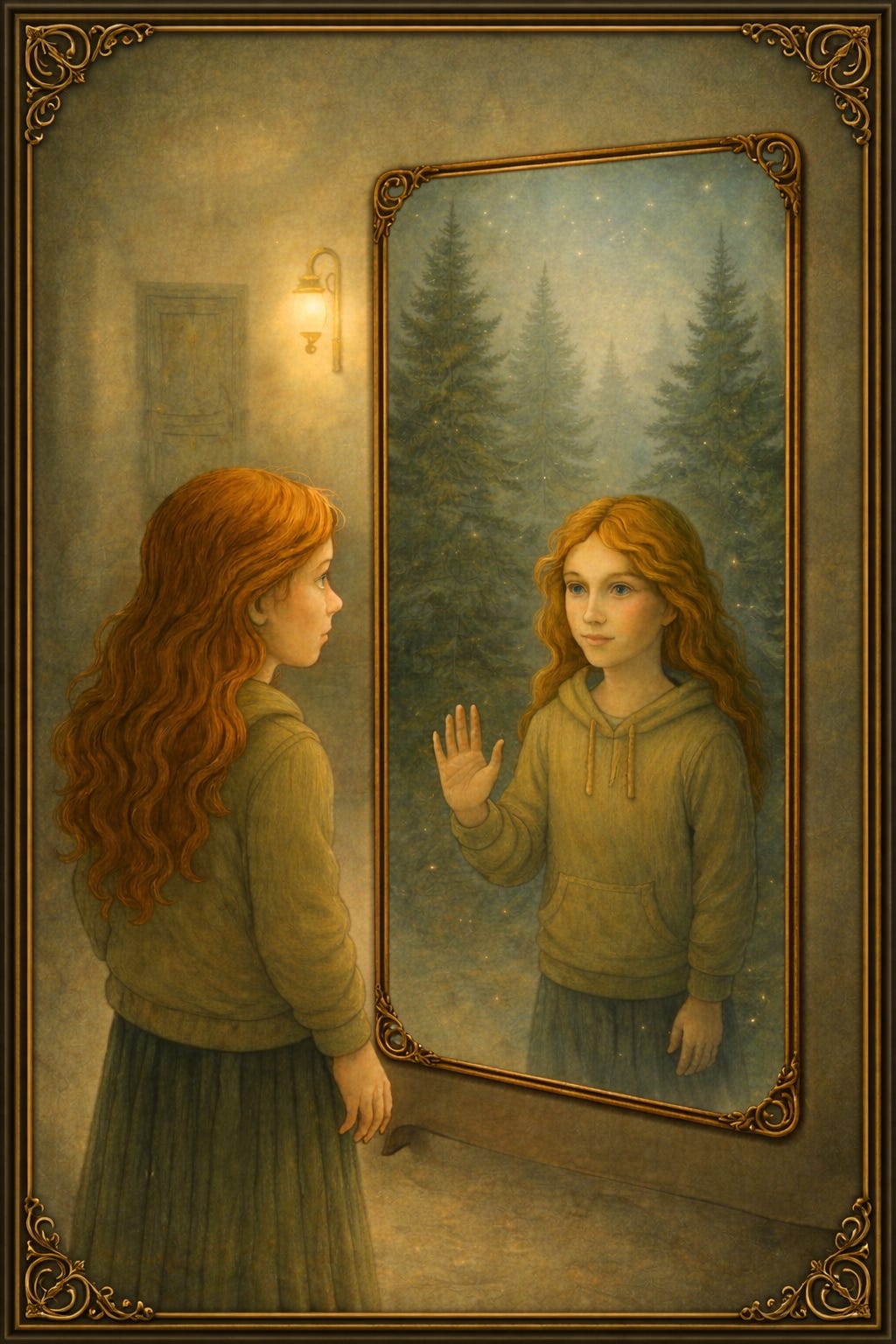
Stella’s mirror-sight, her ability to perceive ripples and presences in water and glass that no one else could see, was the story’s magical expression of heightened sensitivity. Real-world adoptees often report hypervigilance and attunement to what is unspoken, possible survival adaptations from newborn-maternal severance and displacement.
When Sarah encountered Stella frozen before the hallway mirror at age eight, the pediatrician called it a disorder to be managed medically. But Margaret Hawthorn, the Estate Keeper, Charles’s wife, brewed tea from the garden’s innermost circle to calm the adopted child. In time, those closest to Stella learned to accept her perceptual differences as part of who she was. Her fae mentor, Cedra, taught her to steady herself in mirrors, dewdrops, and cedar-ice reflections. Stella thrived within the garden’s honesty, in the spaces that protected her through seasons and life stages. Sarah curated and nurtured, and Stella grew in the botanical sanctuary that was Elizabeth’s legacy.

Author’s Note: Though long retired from horticulture, my work in small gardens and on large estates, I relate to the garden as a sanctuary. I learned over many years that landscapes hold deep time and memory, when planting perennials by stone walls built by hands generations earlier, and fashioning new walls from the same local fieldstone. When wondering whether a decades-old tree was born by seed dispersal, planted by a settler, or nurtured with knife and deft hand in a graft. Beyond human design, gardens are life itself: cycles of growth, dormancy, and renewal, beauty and decay found side by side.
— Mary Ellen
The Garden and the Gate is an essay series that explores botanical traditions and lore, Celtic myth, and themes of adoption. Mary Ellen writes memoir and personal essays as herself, and lyrical fiction as Islay Corwin, author of the Silverton Estate duology.
Thank you for reading and for your support.
The Duology is widely available in e-book:
Through the Yew Hedge: A Tale of Identity Magic
Through the Iron Gate: The Rosemere Records
Amazon