We had decided to give in to our protesting backs and retire my gardening business, to live where property maintenance would no longer be our direct concern. Fifteen years earlier, we had carved beds and borders into a blank slate of lush green lawn, planting perennials, roses, cut flowers, and flowering shrubs.
We found a New York buyer with little, if any, gardening experience, but who seemed willing to try. We found homes for our three Nigerian Dwarf goats and a healthy flock of fancy hens, and moved from our bucolic setting to live small.
In our new condo life, rules required that planting be strictly limited to the “mulch beds.” But we were not content with the builder’s lackluster shrubs and were determined to have our flowers. We reshaped the tiny beds around our unit and added rich organic compost to soil stripped of its top layer.
My gardening business had afforded me aesthetic freedom to design pleasing plant combinations on large estates and suburban gardens. Now I was faced with whittling a long wish list down to what would thrive in this small space.
Many perennials, hardy plants that increase from year to year, bloom for only two to three weeks. Some, like coreopsis, bloom all summer if sheared after the first flush. The challenge is to select flowers for the longest bloom period, and shrubs that stay small while offering texture and color. Pods and seed heads from iris and black-eyed Susan extend interest into fall and even winter, if not cut back until spring.
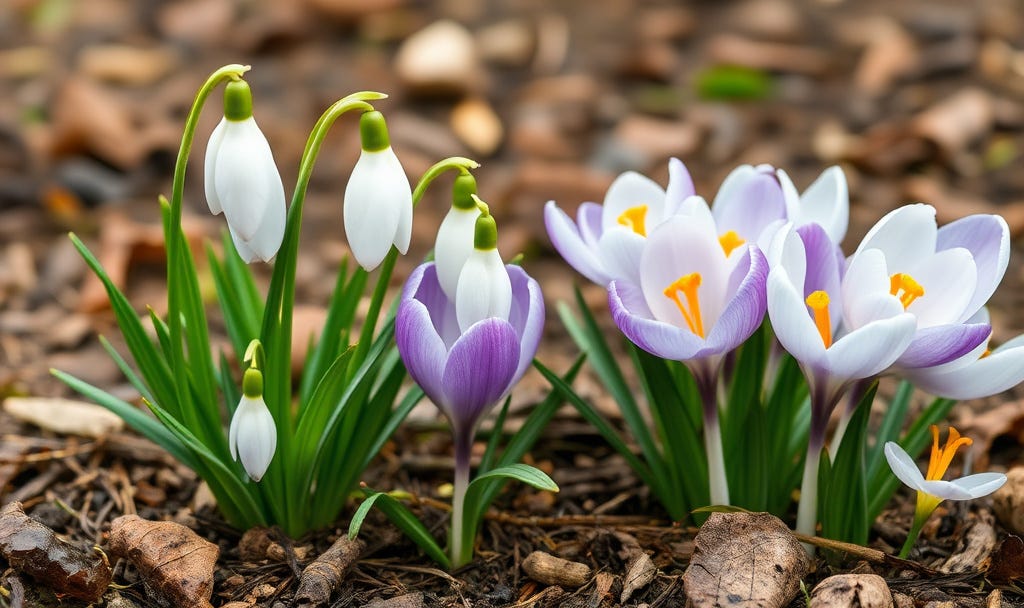
Snowdrops for late winter, crocus, and miniature tulips for early spring. Small gardens call for diminutive plants. A cottage garden is composed of informal, old-fashioned favorites. Among my summer choices were dianthus, perennial geraniums in mauve, pink, and blue, and campanula, the lovely bluebells. Fall brought the quiet beauty of dried hydrangea blooms.
Getting familiar with exposure, the variations in sun and shade, helps guide selection. Which plants will hold through heat, humidity, or drought? Which are suited to a smaller scale? Smaller gardens ask new questions.
I like to create vignettes to be enjoyed up close. Annuals fill gaps until perennials mature. A brief bloom can be placed beside a generous neighbor, or against steady green foliage, so there are no empty spaces in the picture. Knowing the mature size of each plant helps the garden maintain its balance. Repetition of color and form gently guides the eye through the space.
For us, gardening is therapy. We take pleasure in the sun, air, and the smaller tasks. Grooming plants, removing faded leaves and spent blooms, encourages what comes next.