
Adoptees may yearn for the memory of what was lost. The ancestry, the past that came before us. The safety before the severing. We grieve before the returning. Or that we cannot return unless we have the key.
There was a time when I tended a formidable garden. I didn’t have language for this garden of mirrors, but I now express it as a void. My garden was absence. Loss. Bewilderment. My garden was identity confusion. In it, mirrors returned my gaze, offering reflection without recognition. Unanswered questions grew like weeds.
Long after I searched for my natural mother, I encountered the phrase, fog of adoption. Our reunion brought us new roles, but not clarity. I saw in her no regret, she was thrilled I cared to look for her. Proud how I turned out. But in her face, was the fog of effort. She was trying to remember. “Did you hold me?” I asked. She say she could not. The fog was hard at work. She’d always wondered…
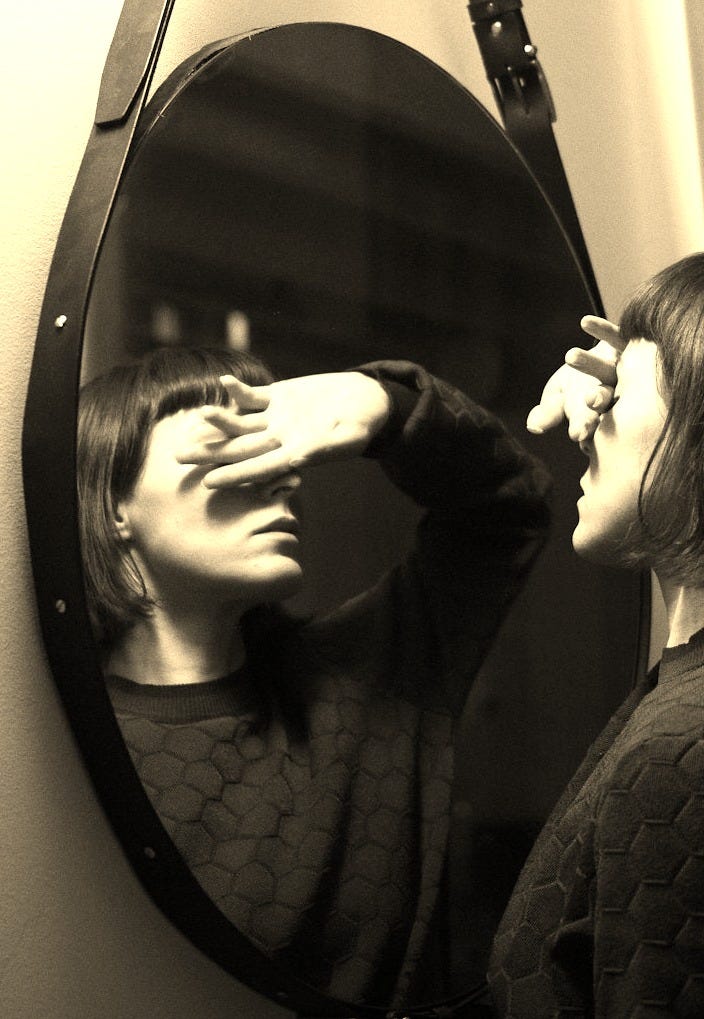
After the thoroughness of her forty-year absence, the year we had together fell short. The cruel rupture; the imprint of relinquishment, caused irreparable loss. The disorientation. Displacement. The fog of adoption is a literal metaphor: the sealing of birth and adoption records ensures obscurity, denies our origins, and erases our ancestry. It covers the mirror, against the traits and tendencies that tell us who we are.
The metaphor found its way into a piece of my prose poetry, Haibun: Mirrors of Loss, first published in HumanKind Literary Journal. Stella’s voice now resonates in Through the Yew Hedge, distilling the fog of adoption into a single image.
Haibun: Mirrors of Loss
I can talk about how my mother surrendered me. Although a newborn, I knew. It mattered. She held me for nine months and in her arms for a brief hello. When I learned Sarah was not my first mother, I asked, “Will you leave me, too?” I worried, “Who will take care of me?” I dreaded a final separation. Ultimate loss: loss of self. I must have caused this pain of separation. Unwanted. Unworthy. With no one person to see in the mirror — no likeness. When I found my birth mother, I felt the wow of reunion, recovery, and self-realization. My fears abated in the knowing; maybe her fears did, too. Lessened, never lost.
Haiku
A sheer scrim ripples
over a girl’s image —
waking to now.
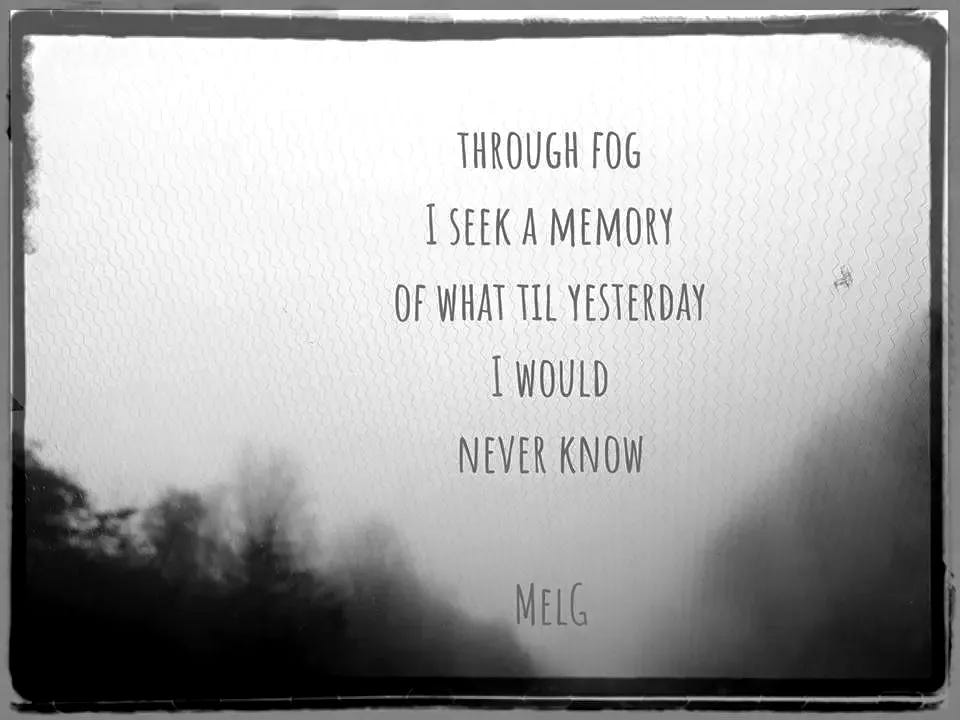
The fog of adoption and the mythic mists of the Celtic Otherworld obscure reality like a veil. In Celtic tradition, thin places are locations where the boundaries between the visible and invisible worlds are permeable. Mist-hung lakeshores. The Yew Hedge. Places where the hidden presses close to the surface. Stella’s Mentor, Cedra, has deep understanding of the inherted trait of mirror-walking, and of the power of memory in the ancient Cedar Groves.
Celtic seers used reflective surfaces to glimpse beyond ordinary sight, perhaps with water in a dark bowl, or in the still, mirroring surface of a sacred well at dawn. The practice, scrying, required safe training and the right conditions. This is the mythic tradition behind Stella’s mirror-sight, where her wound is a gift to be developed under Cedra’s protection. She offers training and safe passage through the permeable mists of Stella’s lost heritage.
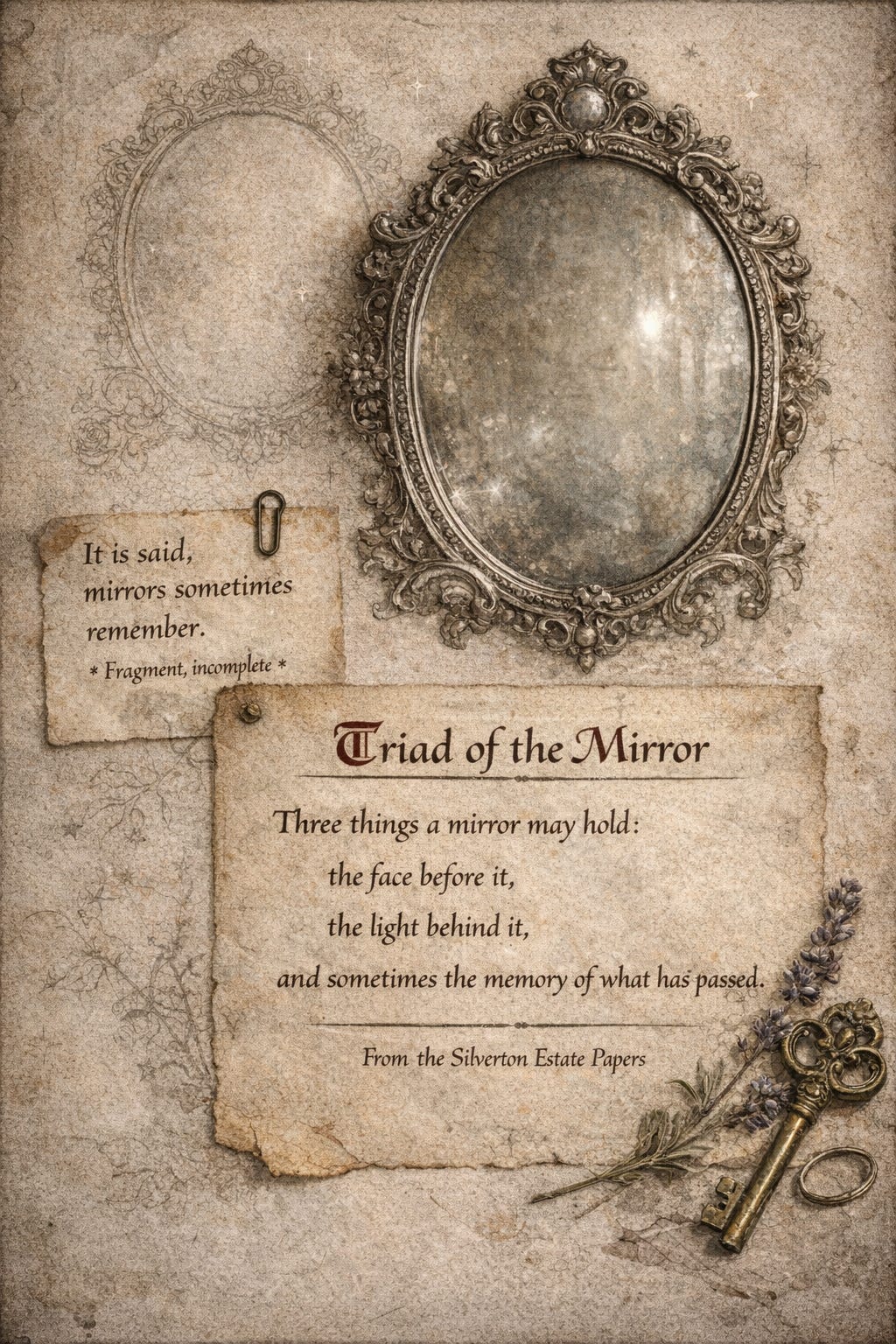
The Triad of the Mirror names three things a mirror may hold: the face before it, the light behind it, and sometimes the memory of what has passed. The mirror holds all three, if you know how to look. In finding the way through the fog, the face in the mirror finally connects.
© Mary Ellen Gambutti
Mary Ellen Gambutti writes memoir and personal essays as herself, and lyrical fiction as Islay Corwin, author of the Silverton Estate duology.
Thank you!
✨⚕️💜