
Fragments
An Adoptee's Story
Readers, this is a new, separate take on Fragmented, published here recently. Thank you so much for reading my poems.
Out of the Blue
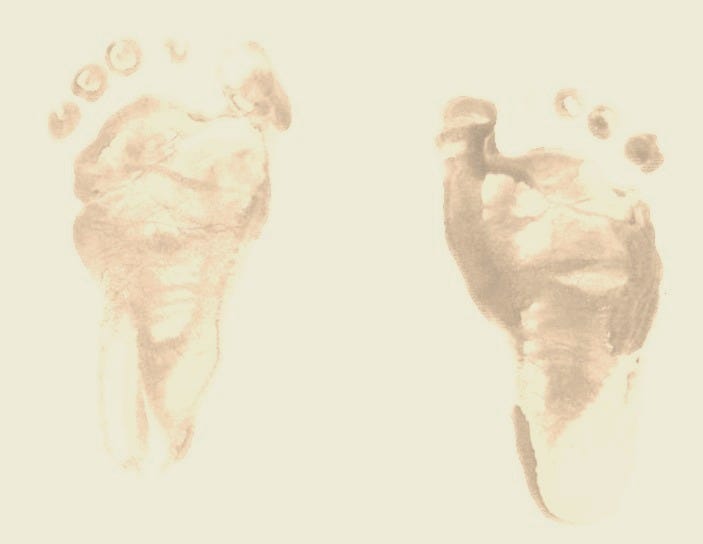
Like the sapphire September sky, she was meant to be. On the twenty-first, the first of autumn, prophecy of place and time. Unequal to the task, a mother’s un-joyful occurrence. Unloved, loved, unloved, and left alone, and again, alone, abandoned with nothing but the potential of me, first she, then me. Abandoned. Once before, twice, and three. Had she, on rising from her birth-ward bed, considered surrender, or a plan intended? Did she think those papers would hold the facts of our fated circumstances? That they’d be muddled, muddied by illegitimacy? Fabricated, flimsy, flat-out false, filed within a mystery hour about her baby girl. No tiny footprints.

The Wound
She heard the music from inside the womb: her mother’s gospel songs, the radio’s twang, the jukebox blare, the honky-tonk guitar. The shouts. Clank of bottles, and sugar taste of beer. She crept under her heart where she felt her mother’s rocking laughter, or a surge of her fear. The grip of her dread. The clutches of her sobs.
A System
The State had a system for poor mothers, mothers who worked in textile mills, like Conestee and Poe, Pendleton and Monaghan — carders and bobbin-winders — women who lived in villages along rail-tracks near mill-dams, waterfalls, in the rented shabby saltbox shanties of millworker daddies and mammas, who worked for meager pay. The State had a system for unwed mothers. Social workers urged, suggested, persuaded mothers to give up their babies. “The agency will find her a good home,” they said. “A married couple will want your baby, and give her a better life,” said the system, the agency, the church, and her parents. “Leave her here. Leave the paperwork to the lawyers. Only sign — here”.

A Child of Choice
February 27, 1952
In the upstairs nursery, the baby girl lies awake in her crib. Maybe her brown eyes follow swaying bare oak branches across the winter windowpane. As she finds her soothing left thumb, she whimpers in empathy to another infant’s cries. She hears the voice of the one who brings her comfort; who changes her diaper, lifts her, and holds her on her soft, white lap. Ruth Ann, she calls her, and the infant opens her mouth like a hungry sparrow for the cereal spoon. The kind woman holds her against her bosom, and chubby fingers reach to the white veil. Sister returns the baby to the crib, props a glass nursing bottle of warm formula against a rolled receiving blanket, and turning, she moves to attend to another waiting infant. Ruth’s brown eyes scan the nursery.
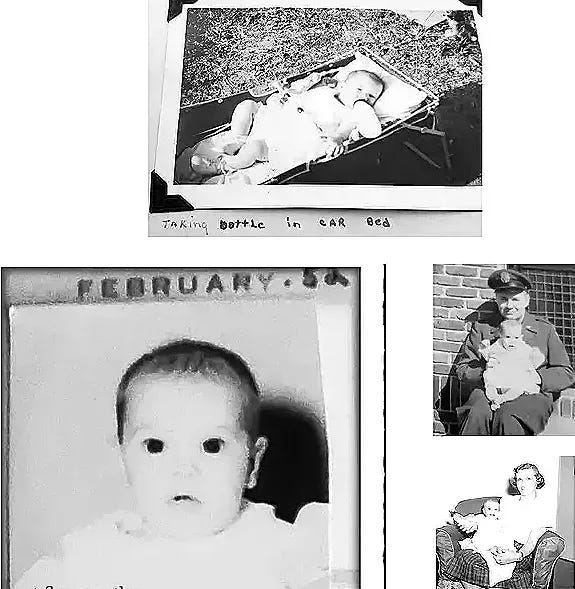
Because they could, South Carolina kept her waiting for her birth records until the age of seventy, and she still has no legal right to her Original Birth Certificate, only the uncertified copy. Perhaps she is one of the lucky ones; the complete process took only thirteen months…
What is now known of Ruth Ann’s timeline from birth:
Two months in emergency custody in the Greenville hospital until Catholic Charities located her mother, persuading her to sign the release.
November to February in the Rock Hill infant home, as a good prospect for adoption.
Eight months probationary care with the Air Force couple in their Sumter apartment.
Adoption is Certified in Rock Hill, October 1952.
Adoption Decree
The party of the first part hereby gives and grants the party of the second part the complete custody, management, care, and control during its minority, together with the complete right and power as one in loco parentis to provide for and consummate the adoption of the said child by such person or persons as in the sole discretion of the party of the second part it may deem proper for the best interests and welfare of the said child ...
Do-Overs
The child’s rights are subsumed and sworn over. Under official State seal, Ruth Ann’s name is replaced. As a legal entity, she is effaced. Vital Statistics locks away the original birth certificate.
What does Ruth Ann lose besides her name? Her mother, her family, her heritage, her medical history, her true place of birth, her origins—her identity. Let’s say she was born in Rock Hill, certified by the Church, while the State holds the true data, the real names. Rebirthed, re-branded like a commodity in a court, her name is exchanged for the name of the chosen child. It would have mattered. Names matter. Double names are popular in the 1950s: Mary Lou, Mary Beth, Mary-Jo, Sue Beth, Sue Ellen. Ellen Mary—the dead mother of the adoptive father—her new name is an upside-down do-over. A mirrored inversion of someone she’ll never know. The infant breathed, bloomed, grew, and was called Ruth Ann for her first five months, and emerged like a butterfly from a do-over cocoon, newly certified in one fell swoop.

So powerful...and so true. The erasure was brutal and absolute.
My birth mother lived in Centralia, a railroad town, named as many were, for its central position between population centers. A place to refuel, park unneeded cars, exchange workers. Lumber and the railroad employed most. I was her second of five at twenty-one, and the only one given away. That was in 1945. The language in the social worker's report was full of distanin. Shame dripping from the pages of the documents. Thousands of us were given away in those years. I was so shamed by these simple facts that I was unable to search for my birth family until my adoptive parents had died. Even then, discovering that my birth mother was still alive, I couldn't reach out. I waited until she died to make contact. Somehow it seemed safer.