Friends, I hope this finds you well. This post from The Garden & The Gate, is in Sarah Caldwell’s voice. If you followed the serialization of my novella, Through the Yew Hedge: A Tale of Identity Magic on Substack, you’ll recall she is a botanist and curator of the Silverton Estate and Gardens. Please stop by Roots & Branches, where your subscription lives, and see posts in Behind the Hedge, as well as the current free posts in The Garden & The Gate. The novella duology is widely available in e-book format.
Your support means a lot to this indie author!
x Mary Ellen
As August opens, the garden stands between fullness and farewell. It is neither the exuberance of June nor the quiet sleep of winter. It is a threshold season of early harvest.
Sarah’s Journal, August 1st
In the Medieval Monastery Garden, the herbs have passed June’s tender awakening and the urgent fullness of midsummer. By now, I’ve moved through culinary beds with intention, pinched the parsley weekly from spring through early summer (the flat-leaf and the curled), harvested cilantro leaves before the plant bolts, tipped dill fronds while they were tender. Chives are continuous. Sorrel in the shaded corner, and the soft new growth of mint clipped before it hardened into midsummer’s fibrous stalks. Now the work transforms.
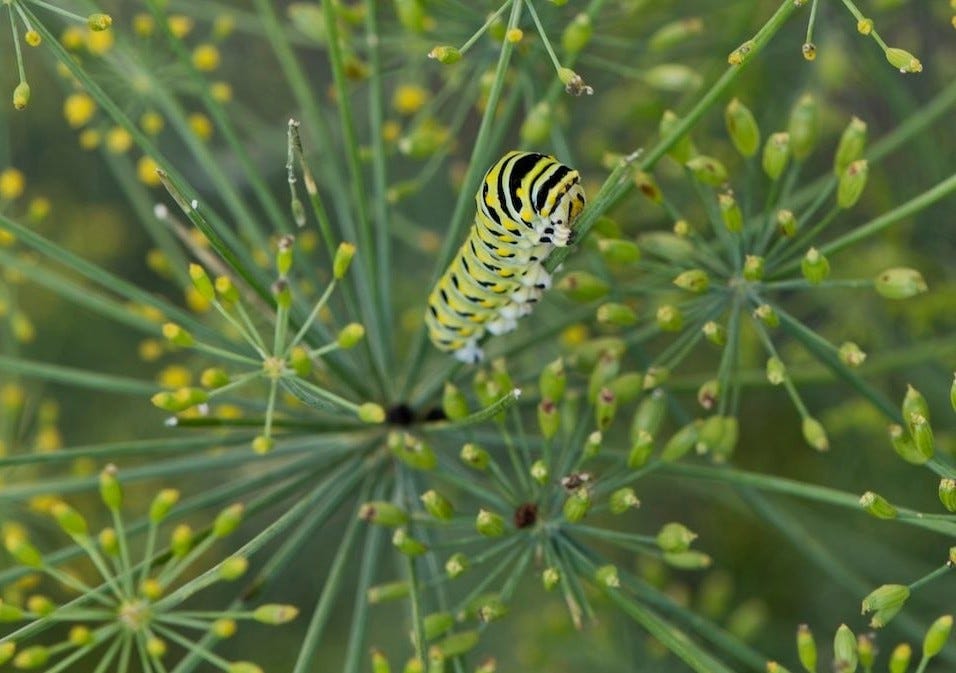
The airy, parasol blooms of dill, fennel, cilantro, and parsley signal the time to snip, dry, and preserve, and were this a culinary garden, I would. But in these curated herb beds, I let the stems of umbelliferous plants stand. The platform-like flower heads attract beneficial insects such as ladybugs, lacewings, hoverflies, parasitic wasps, and tiny native bees that suppress plant pests. Larvae of the swallowtail butterfly climb the parsley stalks. It’s a small act of triage, a choice that divides the garden’s purpose. Some umbels I harvest for their seed, coriander, dill, and caraway for the kitchen and next year’s sowing. I leave others for the pollinators who arrive like benediction.
This is Lughnasadh, the Celtic tradition of the first harvest. At this moment, the plants are shifting toward their deeper purpose. Feverfew opens its tiny daisy flowers. Mugwort stands tall, moving toward seed. Purple thyme and sage parade for bees. These are the plants Elizabeth marked for drying, distillation, and further purpose. Welsh physicians called betony the master herb, suitable for nearly every ailment of the nerves and the head. Eternal and practical, plantain, from which every wound remedy begins.
Every handful of herbs cut for drying, every basket of berries marks the passing of another season. The wealth of harvest and impermanence walk together, reminding us that nothing disappears, but transforms. Blossoms become fruit. Flowers become seed. Fallen leaves melt into rich soil from which next year’s growth will come. No endings in the garden; only changes.
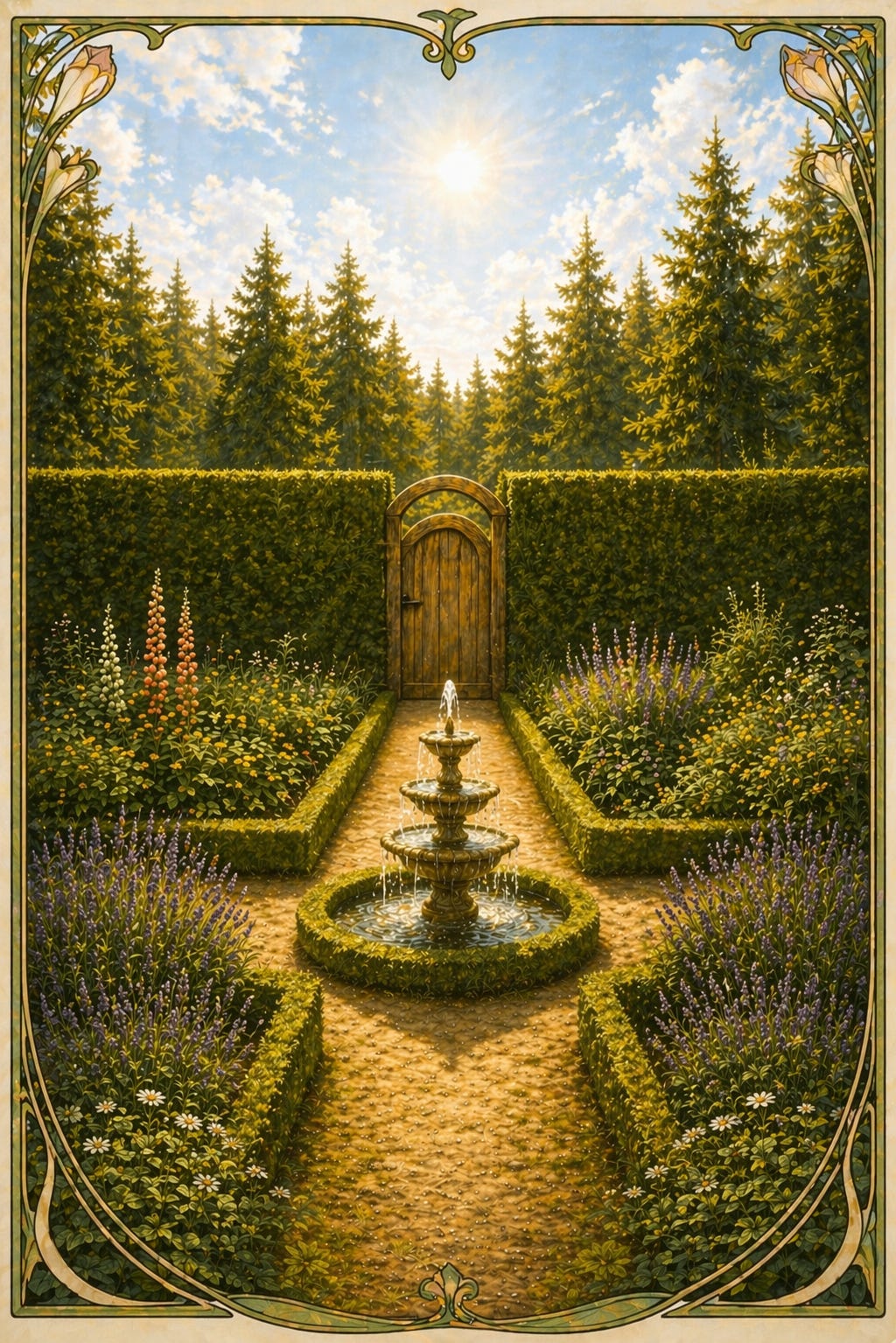
The garden now stands between fullness and farewell. It is neither the exuberance of June nor the quiet sleep of winter. It is a threshold, where we may linger.
Beyond the Medieval quadrant, in the meadow, drifts of purple New England asters. Elderberries are purpling, ripening in a few weeks; they’ll be heavy enough to harvest. Margaret and Charles will cook them down for syrups, jam, and cordial. Elizabeth once concentrated them further.
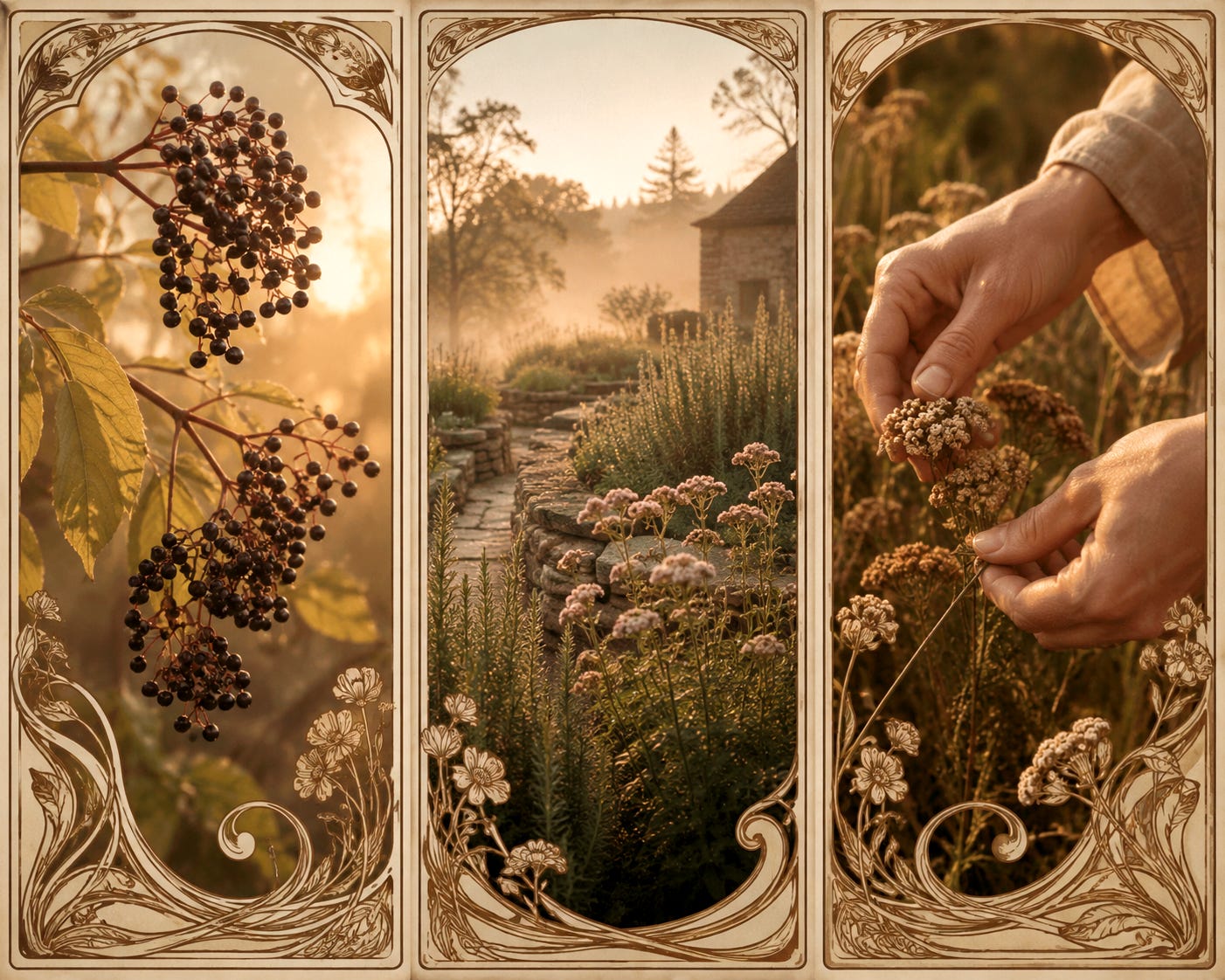
We notice the subtle turnings as the garden offers back what we have entrusted to it. The harvest is both to gather and to let go. Every handful of herbs cut for drying, and every basket of berries marks the passing of another season. The wealth of harvest and impermanence walk together, reminding us that nothing disappears, only transforms. Blossoms become fruit. Flowers become seed. Fallen leaves become rich soil and next year’s growth. No endings in the garden; only changes.